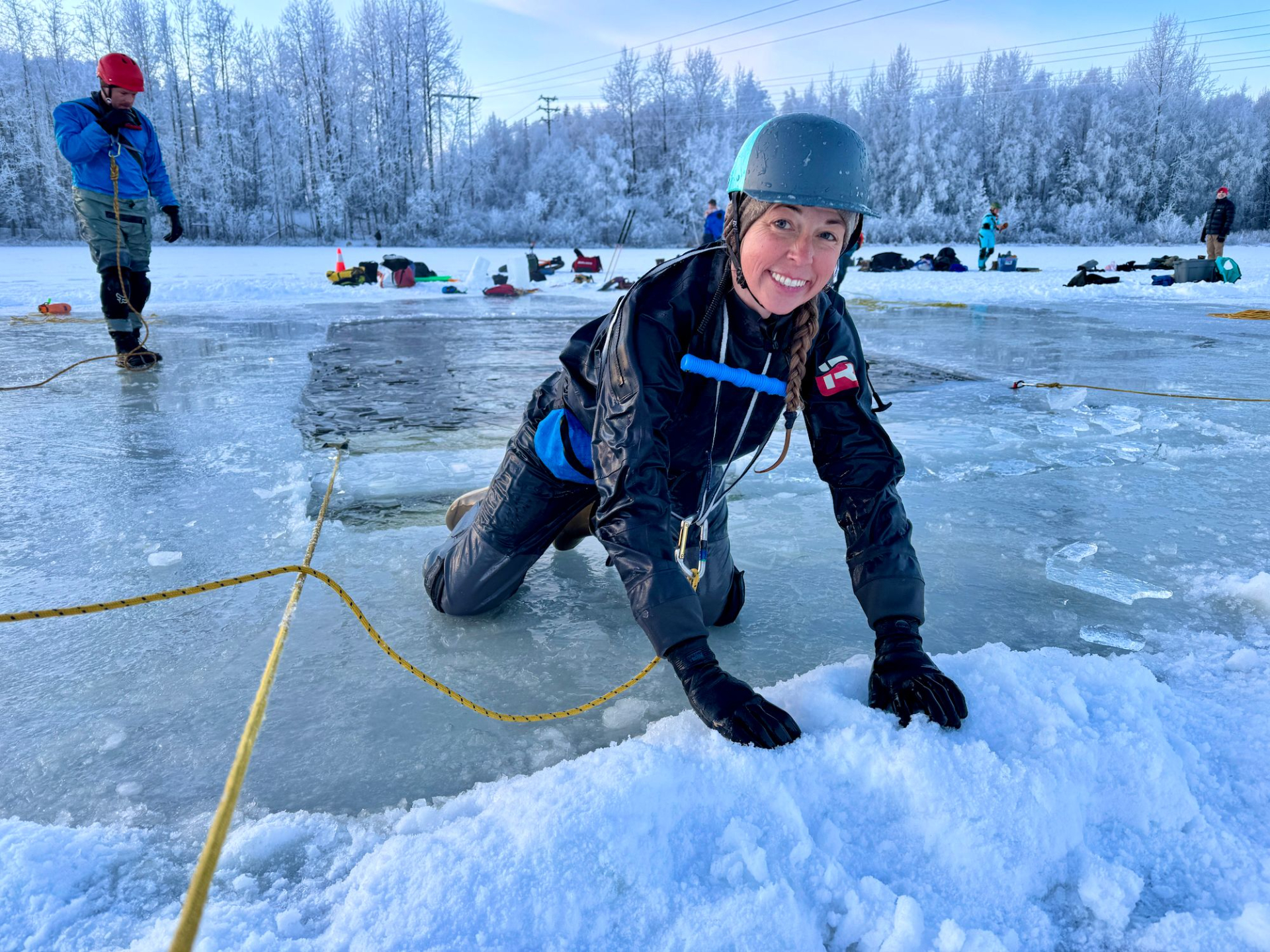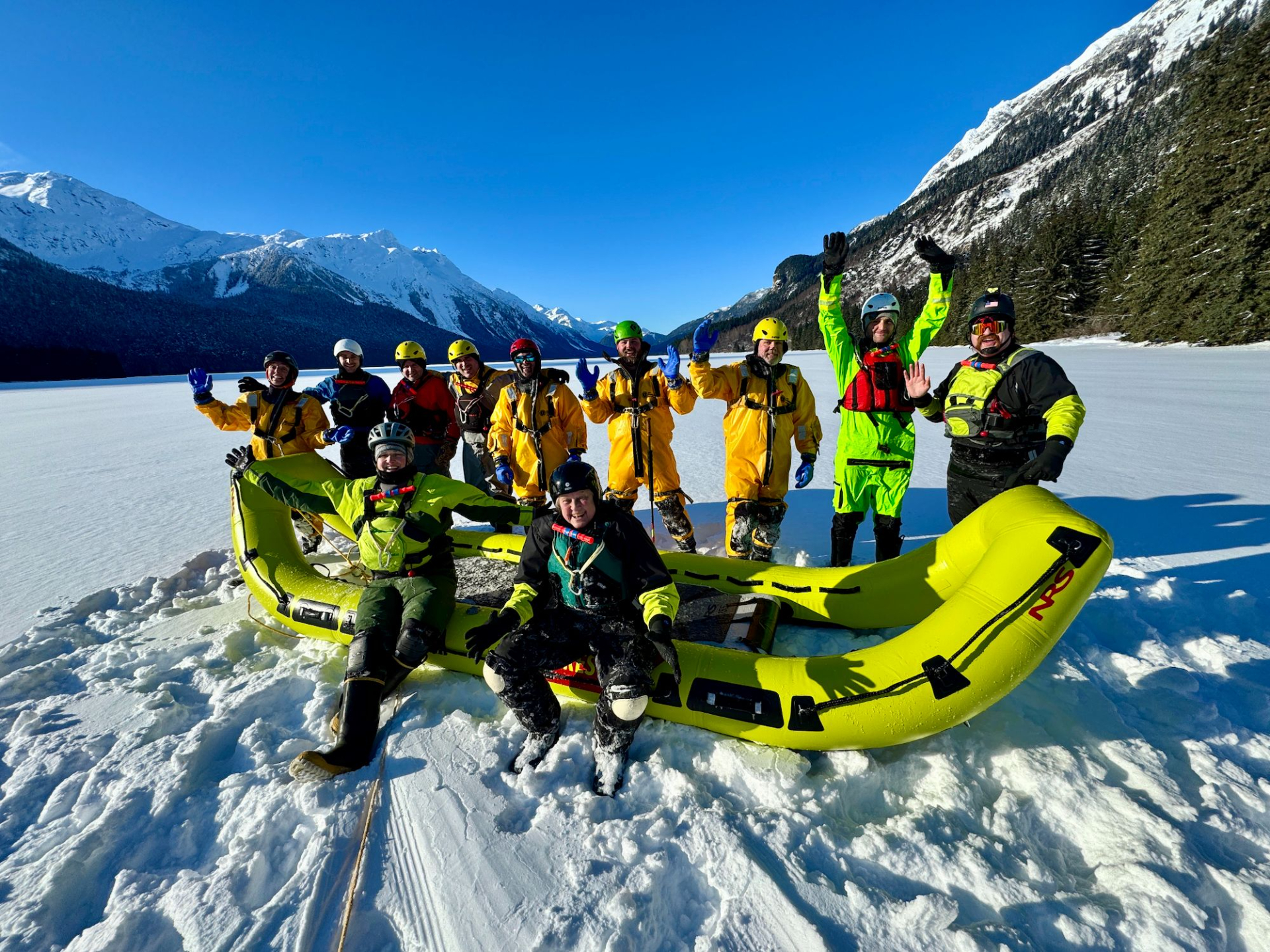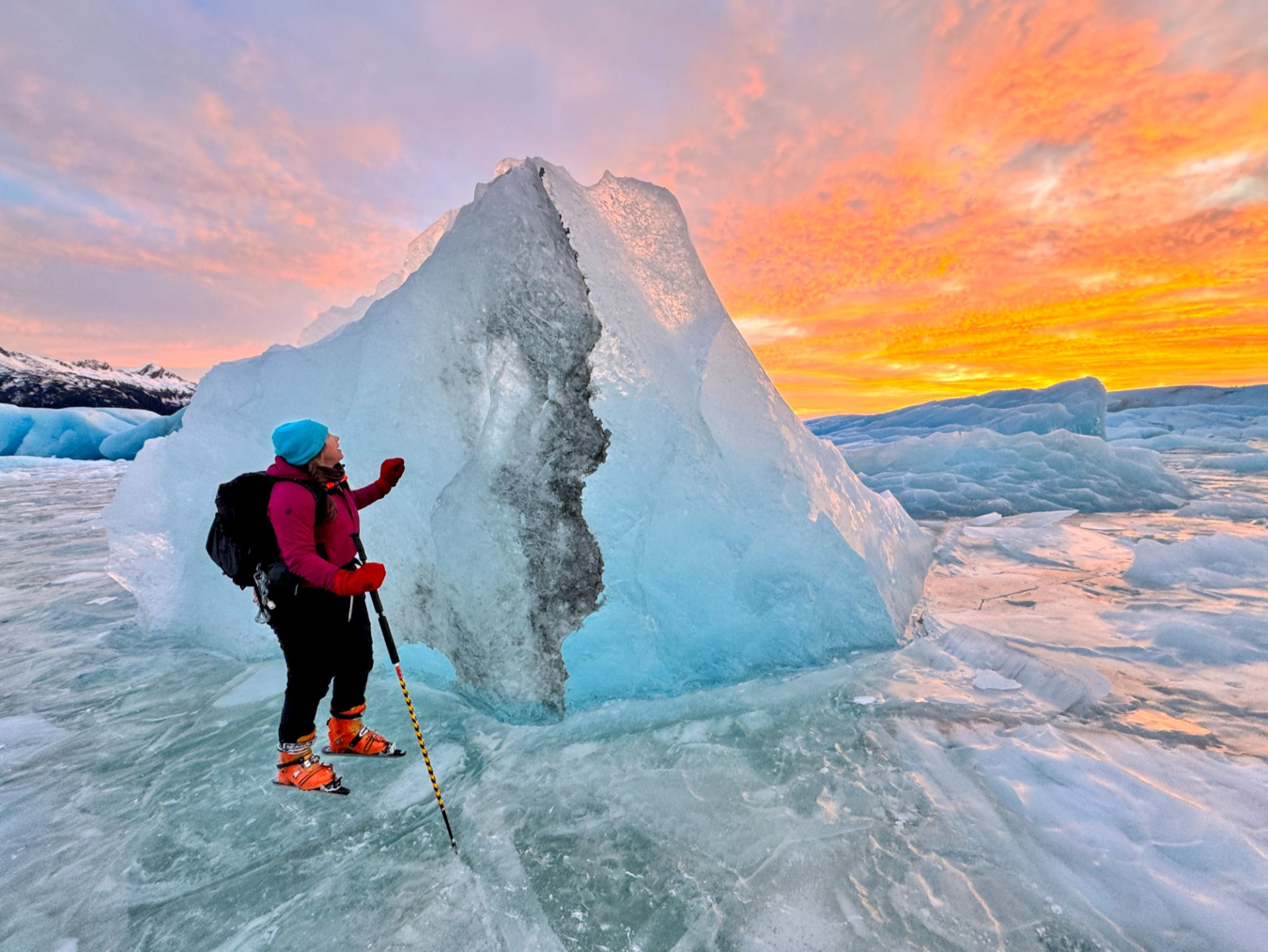
Ice Rescue Training involves inherent hazards—we can not guarantee a safe learning environment. We will discuss the safety plan, what can go wrong, and what to do about it. Luc Mehl is a certified Ice Rescue Instructor and will be equipped to help anyone who needs assistance.
Designed for
Recreationists and professionals who encounter ice during remote work or play. Contact me if you need training that meets NFPA standards (Police, Fire, and SAR).
Essential Eligibility Requirements
You must be physically capable of staying warm in a cold environment, walking on slippery ice, crawling, treading water, and climbing onto the ice shelf (similar to climbing out of a swimming pool). You must be able to follow instructions, whether verbal or by hand signal.
This course involves cold water immersion—you should not participate if you have a history of heart disease or arrhythmia. Cold water can also trigger asthma.
Scheduling
Courses are generally scheduled on short notice when there are 'good' weak ice conditions.
What to expect
In the classroom: A discussion about ice formation, travel strategies, safety, and rescue.
Practical training: Exercises designed for small groups, limited equipment, and remote settings.
The two-hour progression is:
- Self-rescue with and without ice picks
- Partner rescue with throw ropes
- Optional wet immersion
Safety
You will be tethered to a safety line while at the ice’s edge and in the water. A drysuit, PFD, and helmet are required. At the end of the course, you have the option of a wet immersion (without drysuit or PFD).
Required equipment
Supplies can be carried to the course site in a duffle or backpack.
- Drysuit, wetsuit, or semi-drysuit: Drysuits can be rented in Anchorage at Hoarding Marmot and APU. A neoprene neck gasket is okay (semi-dry). You will want integrated socks. Too big is better than too small. It is a really good idea to wear protective padding over the suit, see below.
- Dress for immersion: Wear warm baselayers under your drysuit and a large insulated jacket over your drysuit, to be removed before immersion.
- Multiple sets of gloves or mittens. Neoprene gloves are the most popular. Walmart often has 'glacier gloves' for around $30.
- End-of-day clothing: Expect your drysuit to leak. Bring a full set of extra clothing and insulation, especially if you opt in to the final wet immersion.
- Footwear and ice cleats/grippers: I prefer bunny boots, but whatever you wear will get wet and cold. This is often the limiting factor for folks. Bring dry footwear for the end of the day.
- Helmet: Climbing, bike, ski, river, or equivalent.
- PFD: USCG-approved Type III or equivalent.
Suggested equipment
- If you choose to end the course with a wet immersion: There is a lot of value in dressing out at the site, to be as realistic as possible. Bring the spare clothes you would carry on a tour, and consider a foam pad to stand on and a towel or similar for privacy.
- Hot sugary drink in a thermos
- Protective padding: Protect yourself and your drysuit with shin, knee, and elbow pads.
- Whistle: A rescue whistle should be part of your standard outdoor kit. You don't need one for class, but I'll bring some for sale, $5.
- Backpack, skis, or other equipment: This is an opportunity to experience immersion with the equipment you use on your outings. I'll bring a backpack with weight if you don't want to get your own kit wet.
Provided equipment
I will provide, but you are welcome to bring your own:
- Ice picks
- Ice probes
- Throw ropes
- Chest harness straps
- Hardware
- First aid kit
- Propane heater
What's not covered
- Team rescue
- Rescues involving specialty equipment